Spray Foam Elevate Solutions
Barbican spray foam removal

Spray foam removal in Barbican, done properly

Spray foam removal in Barbican is what we do week in, week out. From the listed buildings around The Barbican and Mayflower Steps to the flats and terraces above Sutton Harbour, we strip out failed polyurethane foam, open cell foam and closed cell foam that is trapping condensation and blocking ventilation. We work across Plymouth, Devon, and we leave your loft ready for a proper insulation job.

4
Years serving Barbican
2,100+
Jobs completed
autumn damp checks
Right now in Barbican

About this area

Spray foam removal in Barbican and the PL1 waterfront

Why we work in Barbican

Barbican sits right on the coast, and the combination of salt air, driving rain off Sutton Harbour and older building stock means foam failures show up faster here than inland. We get calls from homeowners near the National Marine Aquarium whose lofts have started sweating, from landlords in Millbay with mortgage lenders asking for foam removal before a sale, and from businesses around the City Centre who need a roof cleared before a refit. That mix of residential, commercial and lender-driven work is exactly what we are set up for. We are a Plymouth business, not a national outfit sending a subcontractor down the A38.

Loft, roof and cavity foam removal across PL1 and PL4

Spray foam removal in Barbican is a job that has to respect the building it is in. The Barbican is one of the oldest parts of Plymouth, with maritime heritage streets, listed buildings and a lot of timber-framed and stone-walled properties that were never designed for modern spray foam. When foam goes in badly, it traps moisture against the timber, blocks ventilation and leaves you with damp, condensation and, in the worst cases, timber decay. We have worked across PL1 and PL4 since 2022, and we know the difference between a foam job that can be patched and one that has to come out completely. We use dry ice blasting machines, industrial vacuums and hand tools to take foam off without wrecking the plasterboard, vapour barrier or roof structure underneath. If you need spray foam removal near Barbican, we can usually get to you the same day.

Services available

Spray foam removal services across Barbican

Every job in Barbican starts with the same question: how much foam is there, and what is it stuck to? Once we know that, we can tell you whether it is a half-day job or a full strip-out. We cover everything from a single loft in West Hoe to a full warehouse roof near Sutton Harbour, and we can work around tenants, viewings and mortgage deadlines. If you have been searching for spray foam removal near me Barbican and getting national call centres, call us instead.

How we work locally

How spray foam removal works in Barbican

Challenge: Coastal damp and salt air around Sutton Harbour

Foam in coastal Barbican buildings traps moisture against timber far faster than inland. That means more of the roof structure is affected by the time we arrive, and we often find soft timbers that need replacing before the space can be reinsulated.

Solution: We survey the full roof space, not just the foamed area, and use moisture meters on the timbers. Where decay is found, we photograph it and flag it before removal starts, so you know what you are dealing with and can get a carpenter lined up.

Challenge: Listed buildings and fragile historic fabric

Around The Barbican and Mayflower Steps, many properties are listed or in a conservation area. Aggressive removal methods can damage old plaster, stone and timber, and some waste routes are restricted. It slows the job down and rules out the fastest tools.

Solution: We use dry ice blasting and hand tools on sensitive substrates, with containment sheeting and extraction to protect the rest of the building. Waste is separated and sent to licensed handlers, and we keep the work area tidy so the property is presentable throughout.

Neighborhoods we serve

The BarbicanSutton HarbourMillbayWest HoeCity CentreCoxside

Where we work

Barbican

Latitude: 50.3679

Extract Directions

Case files

Recent project: 1

The Barbican

Challenge

A surveyor flagged closed cell foam on the rafters of a listed property near Mayflower Steps. The sale was on hold and the lender wanted photographic evidence of the timber condition underneath.

Execution

We surveyed the roof space, set up containment and used dry ice blasting to lift the foam off the old timber without damaging it. The foam was bagged and removed, and we photographed every rafter once it was clear. The customer got a written summary of what was removed and the condition of the timbers, which went straight to the lender and solicitor.

Impact

The foam was cleared in a single day, the lender signed off the following week, and the sale completed. The customer also got a clear picture of two rafters that needed a carpenter.

Recent project: 2

Sutton Harbour

Challenge

A flat above Sutton Harbour had condensation running down the ceiling and damp patches in the corner of a bedroom. The loft had been filled with open cell foam that had bridged the ventilation gap.

Execution

We removed the open cell foam with hand tools and an industrial vacuum, cleared the blocked vents and checked the vapour barrier. The roof space was left open and breathing again, and we advised on a breathable insulation option rather than reinstating the same foam.

Impact

The condensation stopped within a fortnight and the damp patches dried out. The whole job took one day, and the customer has had no recurrence through two winters.

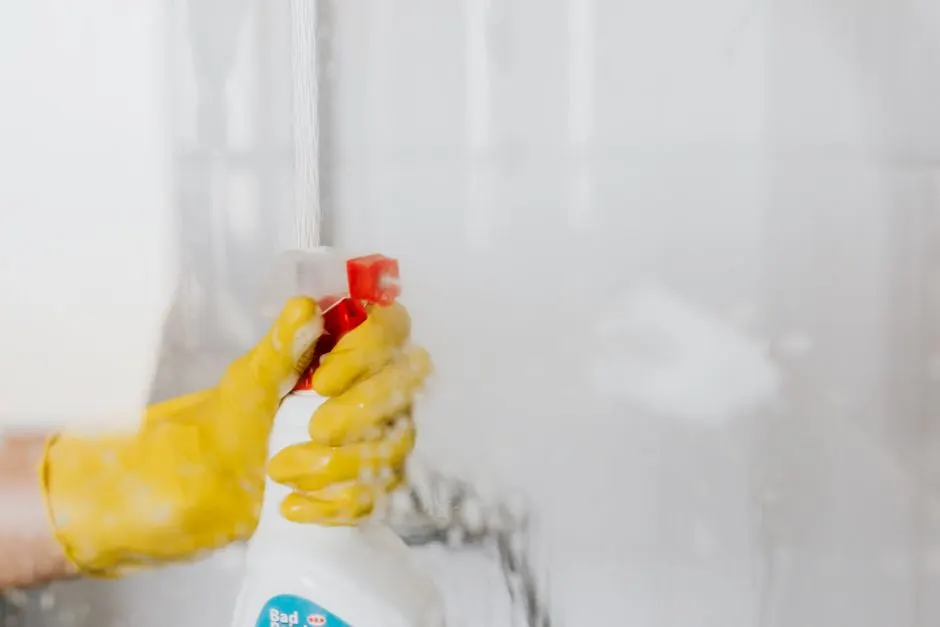
Crop unrecognizable person in yellow latex protective glove spraying detergent from bottle with plastic dispenser at glass of shower cabin
Our track record
Our track record

Field evidence from Barbican jobs

What we see in Barbican lofts

Since 2022 we have completed more than 2,100 spray foam removal jobs across Plymouth, and a large share of them sit inside PL1 and PL4. The pattern in Barbican is consistent: closed cell foam sprayed onto rafters, no ventilation gap, and condensation running down the timbers within a few winters. We have cleared foam from listed properties near Mayflower Steps, from flats above Sutton Harbour and from terraces around West Hoe. On a typical loft we remove between 15 and 30 square metres of foam in a single day, bag it, and leave the roof space ready for a breathable insulation system. If you want the best spray foam removal Barbican has available locally, the evidence is in the photos we hand over at the end of every job.

2,100+
Jobs completed since 2022

Local questions

How much does spray foam removal cost in Barbican?

Most jobs in Barbican run between 900 and 2,500 pounds in 2026. A standard loft with open cell foam sits at the lower end, usually around 900 to 1,200 pounds. Closed cell foam across a larger roof, especially in older properties around The Barbican, can reach 2,500 pounds or more. We survey first and give you a fixed price.

Who is the best spray foam removal company in Barbican?

The best company is the one that surveys before quoting, uses the right equipment for the foam type, and gives you photographic evidence of the timbers underneath. We have completed more than 2,100 jobs across Plymouth since 2022, and we work in Barbican every week. Ask any contractor what method they use and whether the price is fixed.

Is spray foam removal near me available in Barbican?

Yes. We cover PL1 and PL4 daily, including The Barbican, Sutton Harbour, Millbay and West Hoe. Same-day slots are usually available if you call before midday, and we run a 24/7 line for emergency call-outs. Standard loft jobs are typically booked within 24 to 48 hours.

Trust and credentials

Licensed, insured and compliant in Devon

Spray foam removal in Barbican involves working in roof spaces, handling hazardous waste and, on lender-driven jobs, producing evidence that stands up to scrutiny. We carry public liability insurance and employers liability cover, and we work to COSHH requirements on every job, with respirators, extraction and sealed waste bags. Our technicians hold City and Guilds and NVQ qualifications in insulation and related trades, and we are members of CHAS, Constructionline and SafeContractor, with BPCA-aligned pest and contamination awareness for roof spaces. If a lender or solicitor asks for documentation, we can provide it.

Public liability insurance for insulation removal work
Waste carrier registration for hazardous insulation waste
CHAS accreditation CHAS
When To Call

Signs you need spray foam removal in Barbican

Foam does not usually fail overnight. It gives you warnings first, and in Barbican those warnings tend to show up faster because of coastal damp and older building stock. If you have noticed any of the following, it is worth getting the roof space looked at before the problem spreads. Searching for spray foam removal near me Barbican usually means one of these has already happened.

1. Condensation running down roof timbers

Foam that has bridged the ventilation gap traps warm moist air against cold timbers. In Barbican roofs this shows up as beads of water on rafters and felt. Left alone, it leads to timber decay and a much bigger repair bill.

2. Damp patches on ceilings below the loft

If moisture is getting through the roof space, it will find a way into the rooms below. Brown patches, peeling paint or a musty smell in an upstairs room usually point back to a foam-blocked roof space, especially in older properties near the waterfront.

3. A surveyor or lender has flagged the foam

Mortgage lenders dislike spray foam because it hides the condition of the timbers. If your surveyor has raised it, the sale or remortgage will stall until it is removed. We handle these jobs regularly and provide the photographic evidence lenders ask for.

4. Foam is cracked, brittle or pulling away

Foam that has been in place for years can shrink and crack, especially in lofts that get hot in summer and cold in winter. Once it separates from the timber it stops insulating and starts letting moisture through. It is a clear sign the foam has reached the end of its life.

5. You are planning a loft conversion or reinsulation

You cannot insulate over failed foam, and you cannot convert a loft with foam blocking the rafters. If you are planning either, the foam has to come out first. We can survey and remove it so your builder or insulation contractor starts with a clean space.

Local Problem Patterns

Common spray foam problems in Barbican

Barbican has a particular set of conditions that make spray foam fail faster than in most of Plymouth. Salt air off Sutton Harbour, driving rain, older building stock and a lot of properties that were never designed for modern insulation all play a part. These are the problems we see most often, and they are the reason spray foam removal Barbican homeowners call us about is usually urgent rather than cosmetic.

Condensation trapped against roof timbers

Why it happens here

Foam sprayed directly onto felt or rafters closes off the ventilation path. In coastal Barbican, the air is already damp, so moisture condenses on the cold timber and has nowhere to go. It is the single most common cause of timber decay we find.

Our approach

We remove the foam, clear the ventilation path and check the timbers with a moisture meter. Where decay is found, we photograph it and flag it before we finish, so you can get it treated or replaced.

Mortgage refusal after a surveyor flags foam

Why it happens here

Lenders treat spray foam as a risk because it hides the condition of the roof structure. In Barbican, where a lot of housing is older, surveyors are quick to flag it, and sales stall until it is removed and documented.

Our approach

We handle lender-driven removals regularly. You get a survey, a fixed price, a clean removal and a photographic record of the timbers underneath, which is exactly what lenders and solicitors ask for.

Foam bridging the vapour barrier

Why it happens here

When foam is sprayed over a vapour barrier rather than behind it, it creates a bridge for moisture. In Barbican lofts this shows up as damp patches on ceilings and a musty smell. It is a workmanship problem, not a foam problem.

Our approach

We remove the foam carefully so the barrier underneath is not torn, then check whether it is still doing its job. If it has been damaged, we tell you what needs replacing before any new insulation goes in.

Cavity wall foam causing damp internally

Why it happens here

Foam injected into a cavity can bridge the gap and pull moisture inward, especially on exposed coastal walls around West Hoe and Sutton Harbour. It is often installed as a retrofit and causes problems within a few years.

Our approach

We remove the foam, clear the cavity and check the wall can dry out. On older properties we also look at whether the wall was ever suitable for cavity insulation in the first place, so the same mistake is not repeated.

Local Pricing

Spray foam removal cost in Barbican

Typical 2026 pricing for spray foam removal in Barbican starts around 900 pounds for a standard loft with open cell foam, and runs to 2,500 pounds or more for a full closed cell strip-out across a larger roof. The variables are the foam type, the area covered, how well it is bonded to the timber, and how easy it is to get equipment to the loft hatch. Coastal properties around Sutton Harbour often need more survey time because of damp. We give a fixed price after the survey, not a range that creeps upward once work starts. If you want affordable spray foam removal in Barbican Devon, the cheapest quote is rarely the one that leaves your roof space in a fit state to reinsulate.

Availability in Barbican: We cover Barbican seven days a week, with same-day slots available if you call before midday. Emergency call-outs run 24/7 for water damage or failed foam that is causing active leaks. Standard loft jobs are usually booked within 24 to 48 hours, and commercial work is scheduled around your opening hours, including evenings and early mornings.

1

Foam type and density

Open cell foam is softer and comes out faster, so a standard loft is usually a one-day job. Closed cell foam is dense and bonded tight to the rafters, which means saws, scrapers and sometimes dry ice blasting. It takes longer and costs more, often 40 to 60 percent above an equivalent open cell job.

2

Roof area and access

A 15 square metre loft is a different proposition from a 60 square metre roof space. Access matters too. If the hatch is small or the loft is boarded out, we spend longer on setup and carrying waste out. Tight streets around The Barbican can add time for parking and loading.

3

Condition of timbers underneath

If the foam has been trapping moisture, some timbers may be soft or decayed. We flag that during the survey and photograph it, so you can get a carpenter lined up. It does not change our removal price, but it does affect what happens next in the roof space.

Year-Round Coverage

How seasons affect spray foam removal in Barbican

Barbican sits right on the coast, so the weather drives a lot of our call-outs. Autumn and winter bring the damp problems, spring is when people notice the damage, and summer is when sales and refits tend to move. If you are planning spray foam removal in Barbican, the season you book in affects how quickly we can get to you and what we find when we open up the roof space.

Spring

Spring is when damp damage from winter becomes obvious. Ceiling stains, musty smells and soft timbers all show up as the weather warms. It is also the start of the house-selling season, so lender-driven foam removal picks up sharply.

Tip

Book a survey in early spring if you noticed damp over winter. Getting the foam out before the sales season means you are not waiting for a slot when everyone else is.

Summer

Warmer weather dries out roof spaces, which makes removal easier and less messy. It is also peak season for loft conversions and refits, so foam removal is often the first stage of a bigger project. Availability tightens in July and August.

Tip

If your foam removal is part of a conversion or reinsulation, book it early in the summer so your builder is not waiting on us.

Fall

Autumn rain and cooler nights bring condensation back. Foam that bridged the ventilation gap starts trapping moisture again, and damp patches reappear. This is our busiest season for emergency call-outs around Sutton Harbour and West Hoe.

Tip

Get the roof space checked before the worst of the weather. A survey in early autumn usually means removal can be scheduled before the winter rush.

Winter

Cold, wet and windy conditions make roof spaces miserable to work in, and active leaks become urgent. Foam that has been holding moisture all year can start to fail visibly. We run 24/7 call-outs through winter for exactly this reason.

Tip

If water is coming in, call us straight away rather than waiting for a dry day. We can stop the damage getting worse and schedule the full removal once the weather breaks.

Hiring Smart

What to ask before hiring a spray foam removal company in Barbican

Not every contractor who quotes for spray foam removal in Barbican has the equipment or the experience to do it properly. The cheap quote often means someone with a hammer and a van, which is how roof timbers get damaged and plasterboard gets torn. These are the questions worth asking before you let anyone into your loft.

  1. 1

    "What method will you use to remove the foam?"

    Why it matters

    The answer tells you whether they have the right tools. Dry ice blasting and sand blasting equipment are expensive, and a contractor who only has scrapers will struggle on closed cell foam. On older Barbican buildings, the method matters as much as the price.

  2. 2

    "Will you photograph the timbers underneath?"

    Why it matters

    If a lender or surveyor is involved, photographs of the exposed timbers are often required before the sale can proceed. A contractor who does not offer this leaves you chasing evidence later. We include it as standard on every lender-driven job.

  3. 3

    "How do you handle the waste?"

    Why it matters

    Spray foam waste has to go to a licensed handler, not into a skip on the street. In Barbican, where parking and access are tight, you want to know the waste is being taken away properly and not left for you to deal with.

  4. 4

    "Have you worked on older or listed buildings before?"

    Why it matters

    The Barbican has a lot of historic fabric, and aggressive removal can damage old plaster, stone and timber. A contractor with experience in these buildings knows when to slow down and use a gentler method rather than cutting straight through.

  5. 5

    "Is the price fixed after the survey?"

    Why it matters

    A fixed price means the number you agree is the number you pay. Quotes that are 'subject to what we find' often creep upward once work starts. We survey first, then price it, so there are no surprises on the day.

Knowing the Area

Landmarks we use to navigate Barbican

Barbican is compact, but the one-way streets and pedestrian zones around the waterfront change how we plan a visit. We use The Barbican, Mayflower Steps and the National Marine Aquarium as fixed points when we are routing vans and agreeing drop-off locations with customers. If you are in a flat above Sutton Harbour with no parking, we will agree a meeting point and carry the kit in from there. It is the kind of thing that saves half an hour on the day.

Landmarks

  • The Barbican

    The historic quayside area gives us a fixed reference for jobs in the oldest streets, where access is tight and parking has to be arranged in advance. Most of our listed-building work sits within a few minutes of here.

  • Mayflower Steps

    A useful marker for the western edge of the Barbican patch. Properties around here are often period builds with loft foam, and we use the steps as a meeting point when a customer has no easy parking outside.

  • National Marine Aquarium

    Sits at the eastern end of the Barbican and helps us separate Sutton Harbour jobs from Coxside and the City Centre. It is also a handy drop-off point for larger equipment when a street is closed to vans.

Commercial Districts

  • Sutton Harbour commercial quay

    Waterside units, hospitality and marine businesses. Foam removal here is usually part of a refit or a landlord requirement, and we work around opening hours so the business keeps trading while we strip the roof space.

  • City Centre retail and office core

    Offices, shops and upper-floor conversions. Demand is driven by change-of-use projects and insurance conditions. We schedule early mornings and evenings so the work does not disrupt staff or customers.

Transport & Access

  • Plymouth Railway Station

    About ten minutes from Barbican by road. Useful when we are coordinating with customers arriving by train for a survey or handover.

  • A374 Embankment Road

    The main route in and out of the eastern side of the city. It keeps our travel times to Coxside and the City Centre predictable, even at peak hours.

!

Get spray foam removal in Barbican sorted this week

If you have foam in a Barbican loft, a surveyor has flagged it, or you have noticed damp coming through a ceiling, call us on 0175 290 5074. We will survey the roof space, tell you exactly what needs to come out and give you a fixed price. Same-day slots are often available, and we run a 24/7 line for emergencies. We have been working in Plymouth since 2022 and Barbican is one of our core areas.

Call now
Call Now: 0175 290 5074